IMF Lifts 2026 Growth Forecast but Warns on AI and Debt
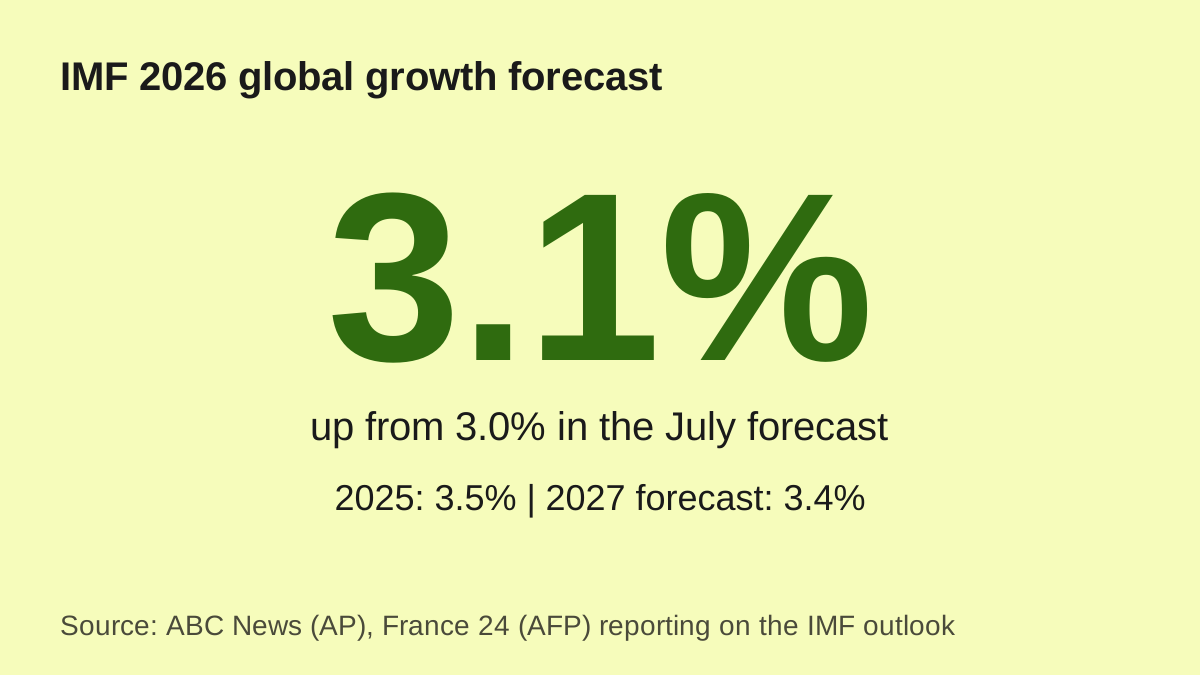
The International Monetary Fund raised its forecast for global economic growth in 2026 to 3.1%, up from 3.0% in July, in its World Economic Outlook released on 12 October at its annual meetings in Bangkok. The Fund described the outlook as highly uneven and said risks are tilted to the downside, citing the war in the Middle East, an AI-driven investment boom and high public debt.
What happened
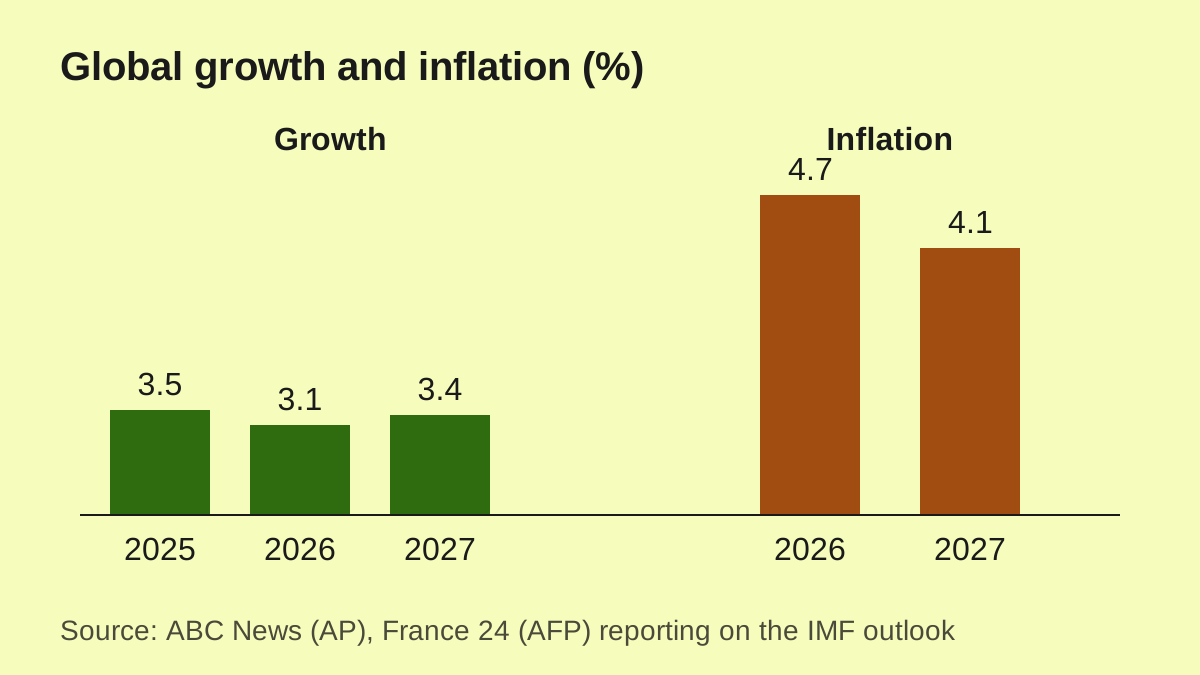
According to ABC News, which carried the Associated Press report, the IMF now expects the world economy to grow 3.1% in 2026, compared with 3.5% in 2025, and 3.4% in 2027. Global inflation is projected at 4.7% in 2026, falling to 4.1% in 2027.
The forecasts differ widely by region, according to the same report:
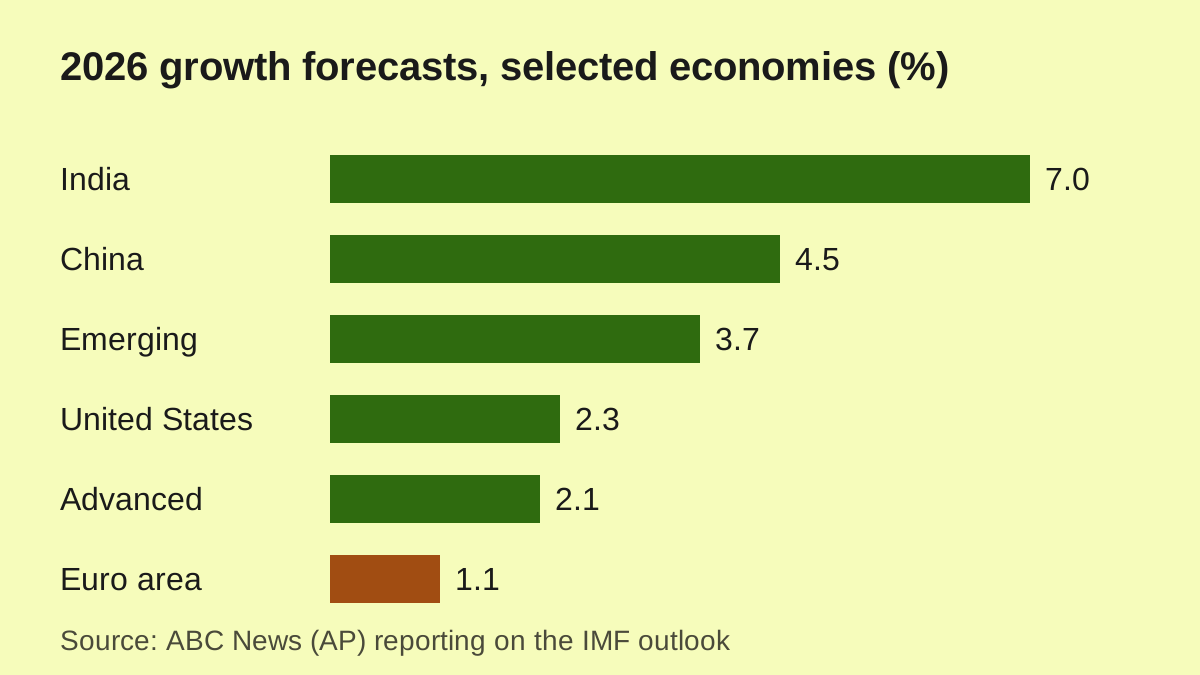
- United States: 2.3% in both 2026 and 2027.
- Euro area (21 countries): 1.1% in 2026 and 1.2% in 2027.
- China: 4.5% this year, down from 5% in 2025.
- India: 7% this year, down from 7.7% last year, still the fastest-growing major economy.
- Advanced economies: 2.1% in 2026, slowing to 1.9% in 2027.
- Emerging and developing economies: 3.7% in 2026, rising to 4.4% in 2027.
France 24, citing AFP, reported that the Middle East and Central Asia region is expected to contract by 0.3% in 2026, and that Saudi Arabia’s forecast was cut by 5.0 points to a contraction of 3.3%. ABC News reported that the forecasts assume oil and gas shipments through the Strait of Hormuz resume by March, with oil averaging $96 a barrel this year.
Background
The IMF’s assessment follows an energy shock linked to the regional war. France 24 reported that refined petroleum product prices remain 70% to 95% above pre-war levels, which the Fund says is straining energy-importing and low-income countries most.
At the same time, an AI-related investment boom has supported growth. IMF chief economist Silvana Tenreyro told the Bangkok meetings, as quoted by France 24: “The global economy has been resilient, but that resilience is under strain, with risks tilted to the downside.” France 24 reported she said AI accounted for almost half of the rise in global trade from 2023 to 2025. According to ABC News, the United States and China account for more than three-quarters of net demand for AI-related chip imports and equipment.
Why it matters
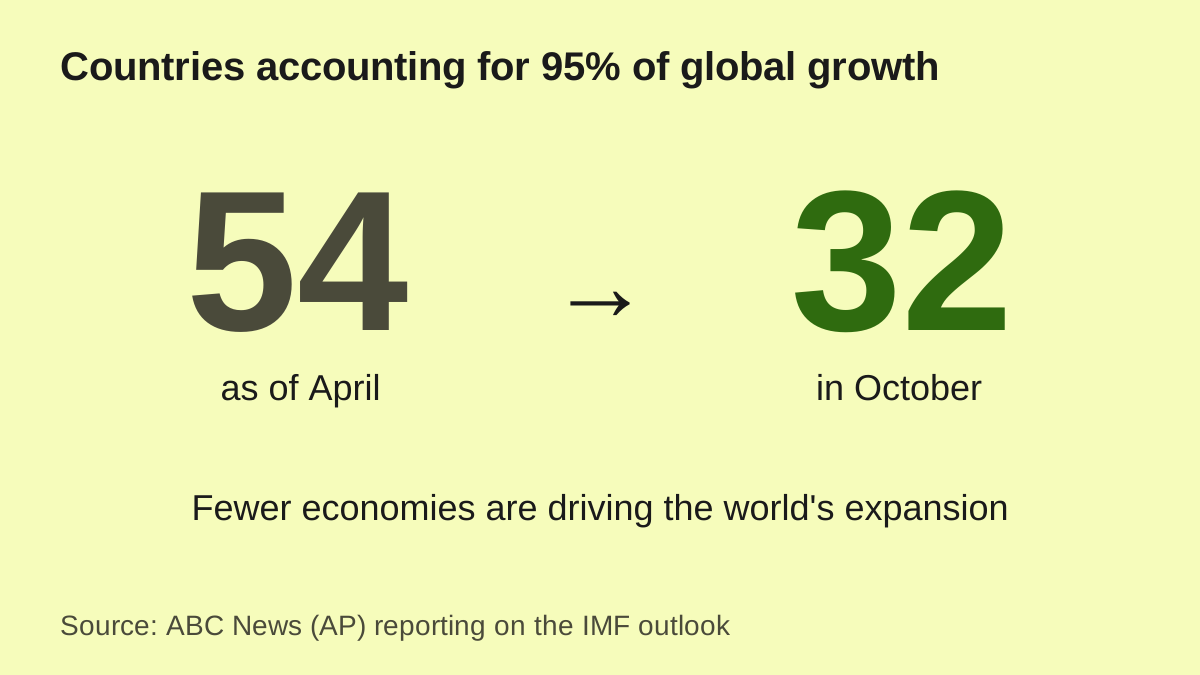
The upgrade is small, but the composition of growth is narrow. ABC News reported that 32 countries now account for 95% of global growth, compared with 54 countries as of April. The IMF called the outlook “bifurcated” and the global economy “fragmented”, according to France 24.
Debt is the other concern. France 24 reported that global debt-to-GDP ratios are at “sky-high” levels, including in advanced economies, and the IMF urged governments to cut spending and manage borrowing, which it noted is difficult for developing countries facing the energy shock. ABC News reported the Fund also urged countries to strengthen public finances because borrowing costs are high.
The picture for emerging and developing economies is mixed. ABC News reported their growth is forecast at 3.7% in 2026, down from 4.5% in 2025, before rising to 4.4% in 2027. Advanced economies are expected to grow 2.1% this year, according to both reports, with France 24 noting that Taiwan and South Korea, which sit in the AI supply chain, are expected to post significantly higher figures.
Employment is a longer-term question. According to ABC News, IMF Managing Director Kristalina Georgieva estimated AI will affect roughly 40% of jobs globally, calling the effect “a slow moving tsunami, but a tsunami nonetheless.”
What to watch
- Energy and shipping: The forecast depends on Hormuz shipments resuming by March. A longer disruption would change the inflation and growth picture.
- AI valuations: The IMF warned the boost could end abruptly if expectations about AI profits and productivity are reassessed. ABC News reported that Asian AI-related shares sold off on Tuesday, with South Korea’s Kospi closing 5.5% lower after falling as much as 7%.
- Bond yields and debt: Officials cited rising bond yields as a risk for heavily indebted governments.
- Central banks: France 24 reported Tenreyro backed interest rate increases where needed to curb inflation.