Yemen Cholera Cases Triple in Three Weeks as Fighting Displaces Families
The World Health Organization (WHO) said on 13 October that suspected cholera cases in Yemen have roughly tripled in three weeks. The rise comes as renewed fighting between the Houthis and the government has forced large numbers of people into crowded camps with limited safe water. The agency says its emergency response is badly underfunded.
What happened
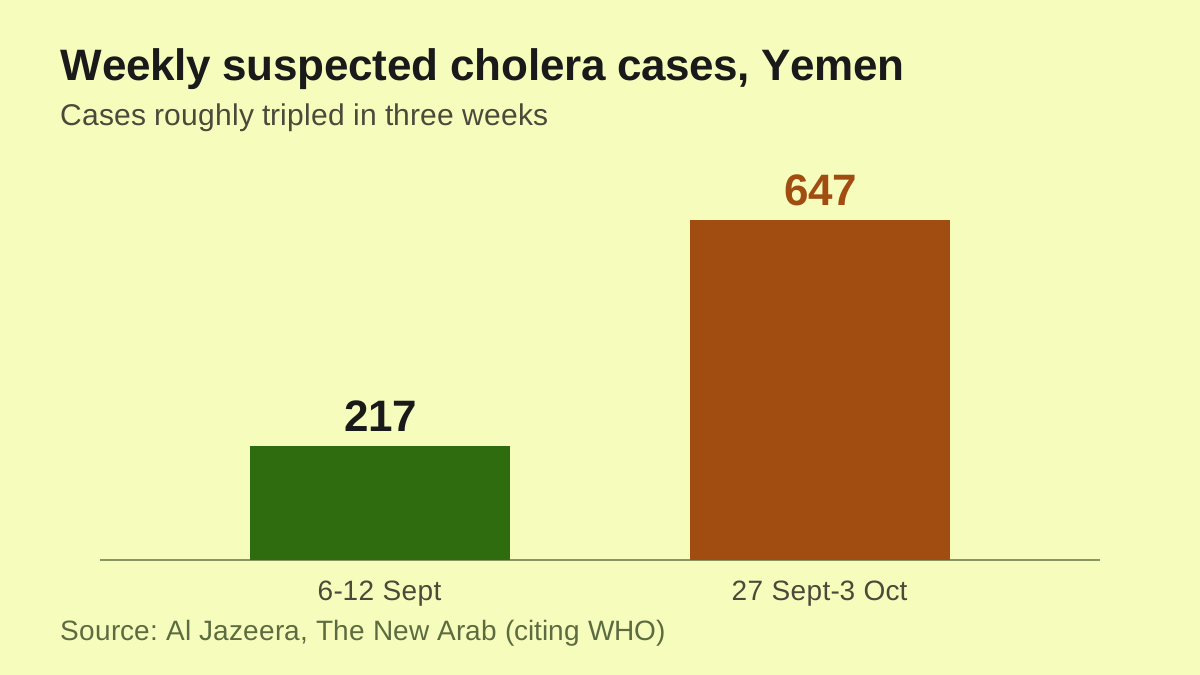
According to the WHO report, weekly suspected cases rose from 217 in the week of 6–12 September to 647 in the week of 27 September–3 October. Al Jazeera and The New Arab both reported the figures.
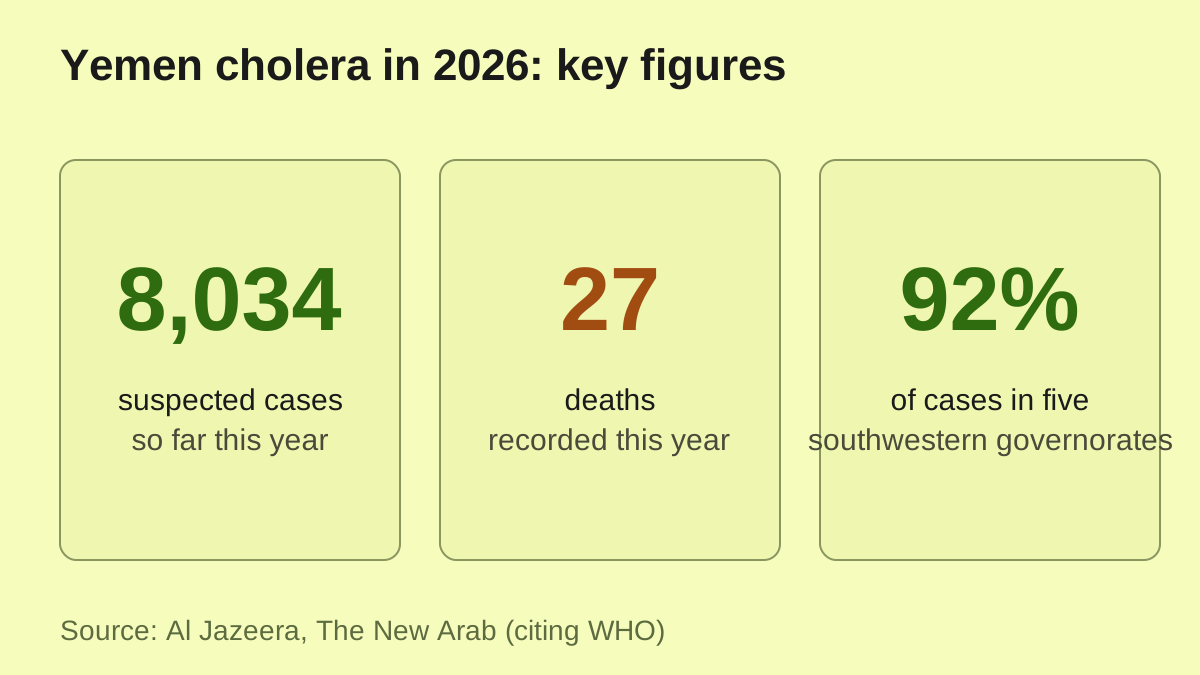
Yemen has recorded 8,034 suspected cases and 27 deaths so far this year, and about a quarter of those cases came in the past four weeks. Five southwestern governorates, Abyan, Lahij, al-Dhalea, Taiz and Aden, account for 92% of reported cases. The disease has also reached remote displacement camps in Hadramout in the east, which medical teams find hard to access.
The WHO’s emergency director for the region, Annette Heinzelmann, said: “Families fleeing conflict are now facing another threat from diseases that can be prevented and treated.” She warned that without urgent funding and unimpeded access to safe water, vaccination and essential health services, outbreaks could spread rapidly.
Background
Cholera is an acute intestinal infection caused by the bacterium Vibrio cholerae and spread through contaminated food and water. It causes severe diarrhoea, vomiting and muscle cramps. It can be fatal if untreated, but it can be treated with oral rehydration and, in severe cases, antibiotics.
The disease has recurred in Yemen for years. A 2017 wave infected hundreds of thousands of people and killed at least 2,000, according to Al Jazeera. In 2024 the WHO warned that the country faced the “highest burden” of a global outbreak.
The current rise follows renewed fighting. According to Al Jazeera, clashes between the Houthis and the government reignited this year, ending a period of fragile calm that had lasted around four years. The New Arab reports that the war between the Saudi-led coalition, which backs the government, and the Iran-backed Houthis has reignited during the wider US–Iran conflict, leaving hospitals treating thousands of injured people. Al Jazeera reports that the fighting has forced more than 200,000 people to flee; the International Organization for Migration (IOM) said on Monday that more than 217,000 had left their homes since the escalation.
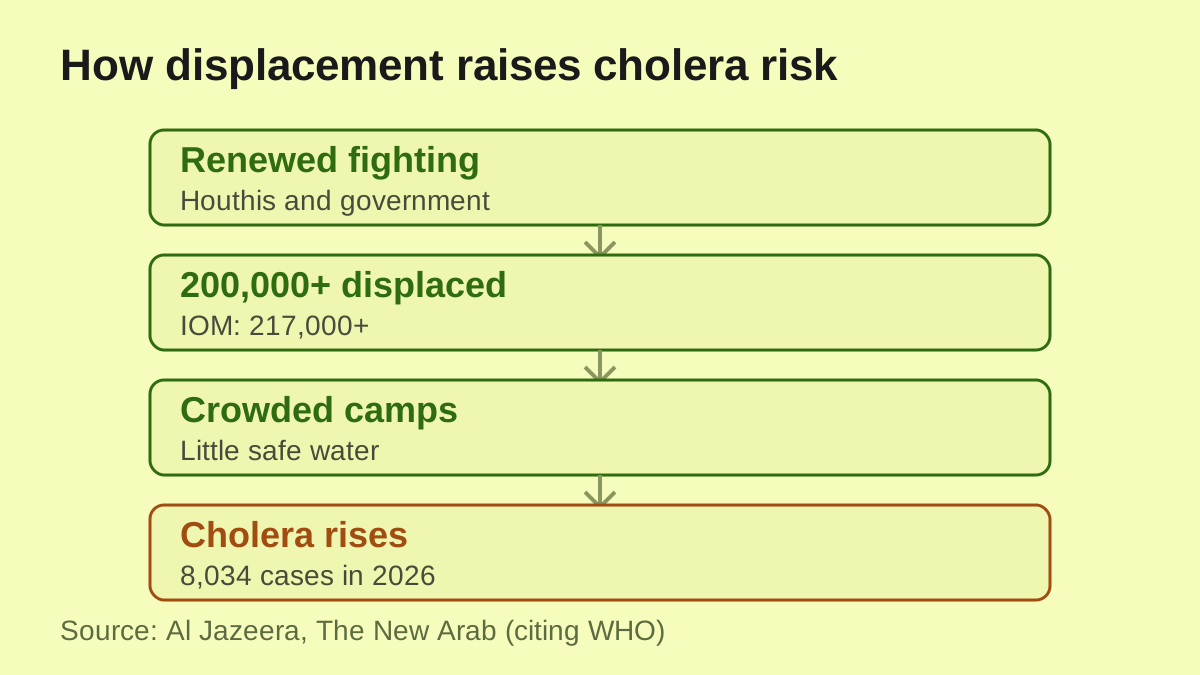
The WHO points to mass displacement, overcrowding, limited access to safe water and disrupted health services as the factors raising the risk of cholera, measles and other preventable diseases.
Why it matters
Yemen was already described as one of the world’s worst humanitarian crises before the latest displacement. The new outbreak adds a second health emergency on top of the existing one, at a time when aid organisations are already working with limited resources and restricted access in several areas. Health services are stretched by war-related injuries, and displaced families in camps often lack clean water and sanitation, the conditions in which cholera spreads fastest.
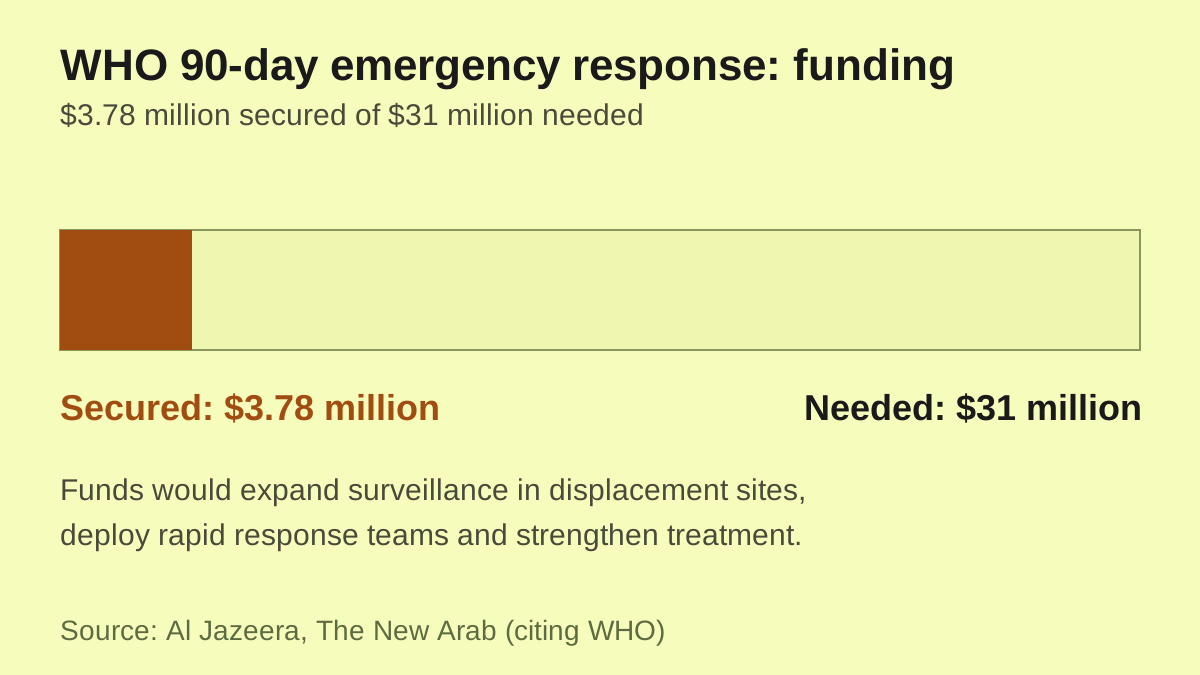
The funding gap is large. The WHO says it needs $31 million for a 90-day emergency response in Yemen and has so far secured $3.78 million. The money would expand disease surveillance in displacement sites, deploy rapid response teams, strengthen cholera treatment and improve infection prevention in health facilities.
Photographs published by Al Jazeera from 8 October show displaced people waiting for treatment from Doctors Without Borders (MSF) at a camp in Aden, one of the five governorates where most cases are reported. The WHO’s list of planned measures reflects that: surveillance first, so new cases are found quickly, then treatment capacity and infection prevention inside clinics. The WHO describes the response as a 90-day effort, so the coming weeks will show how quickly resources and supplies can reach the affected areas.
Because the outbreak is concentrated in a few governorates but is already appearing in hard-to-reach camps, early detection matters. Outbreaks of preventable disease among displaced people can spread beyond the original area if surveillance and water services lag behind.
What to watch
- Weekly case counts: whether the WHO’s next updates show the rise continuing past 647 weekly cases or levelling off.
- Funding: whether donors close the gap between $3.78 million secured and the $31 million requested.
- Access: whether aid workers can reach the displacement camps in Hadramout and other remote areas.
- Fighting: whether further clashes cause more displacement, since the IOM count of more than 217,000 people is already high.
- Other diseases: the WHO has also flagged measles and other preventable illnesses as risks in crowded sites.