UN Warns of Food Crisis as Hormuz Fertiliser Plan Stalls
On Wednesday, 14 October 2026, UN Under-Secretary-General Jorge Moreira da Silva warned that parts of Asia and Africa could face a food security crisis if a UN plan to move fertiliser through the Strait of Hormuz is not agreed. According to Al Jazeera and Reuters, he said it was “absolutely critical” for Iran and the United States to accept the proposal within weeks, because planting season is approaching.
What happened
Moreira da Silva spoke to Reuters on the sidelines of the IMF and World Bank meetings in Bangkok, Thailand. He said that if the planting season is missed, the “productivity of agriculture would significantly drop” and price impacts would grow. Farmers follow strict crop calendars, so even slight delays can seriously affect yields. He did not say why the US and Iran had not yet agreed.
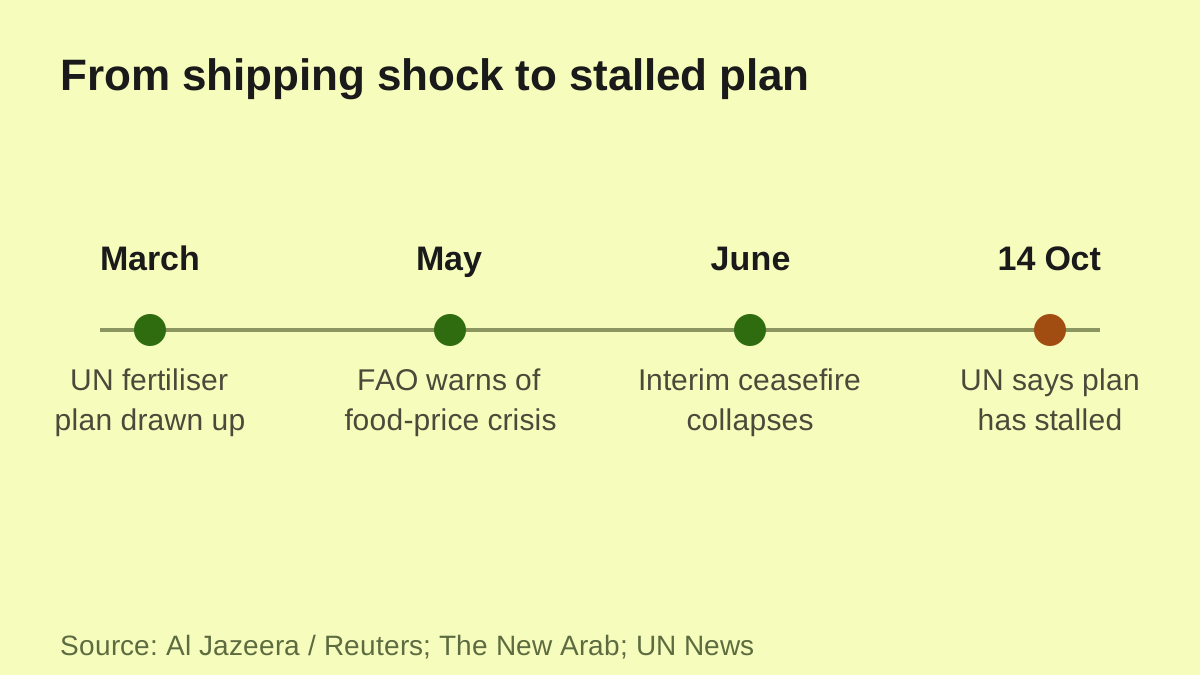
The proposal was drawn up in March. It calls for a UN-staffed coordination centre in Oman to register vessels and oversee their safe passage through the strait. UN monitors would work with local authorities at Gulf ports to verify cargo loading, ships would be tracked in transit, and extra inspections could take place if countries raised concerns about a vessel or its cargo. The plan could be activated within seven to 10 days if both Iran and the US agree, and it could run alongside talks on a broader deal to restore freedom of navigation.
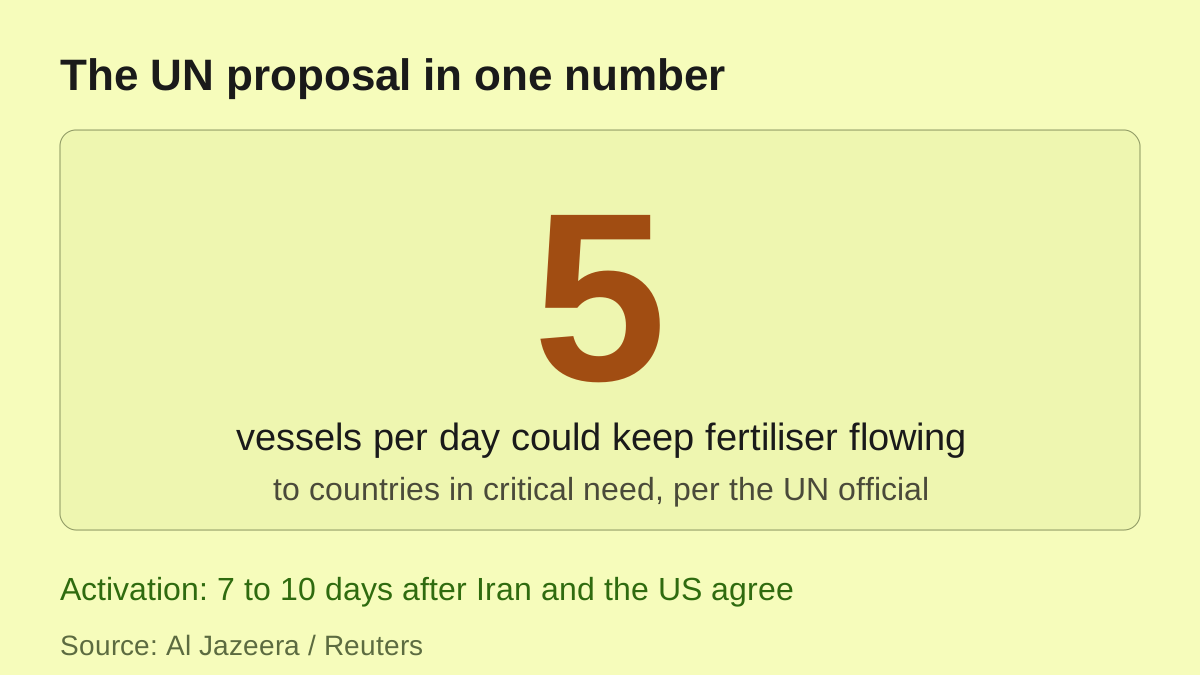
Moreira da Silva said that passage of only five vessels per day could keep fertiliser flowing to countries in critical need.
Background
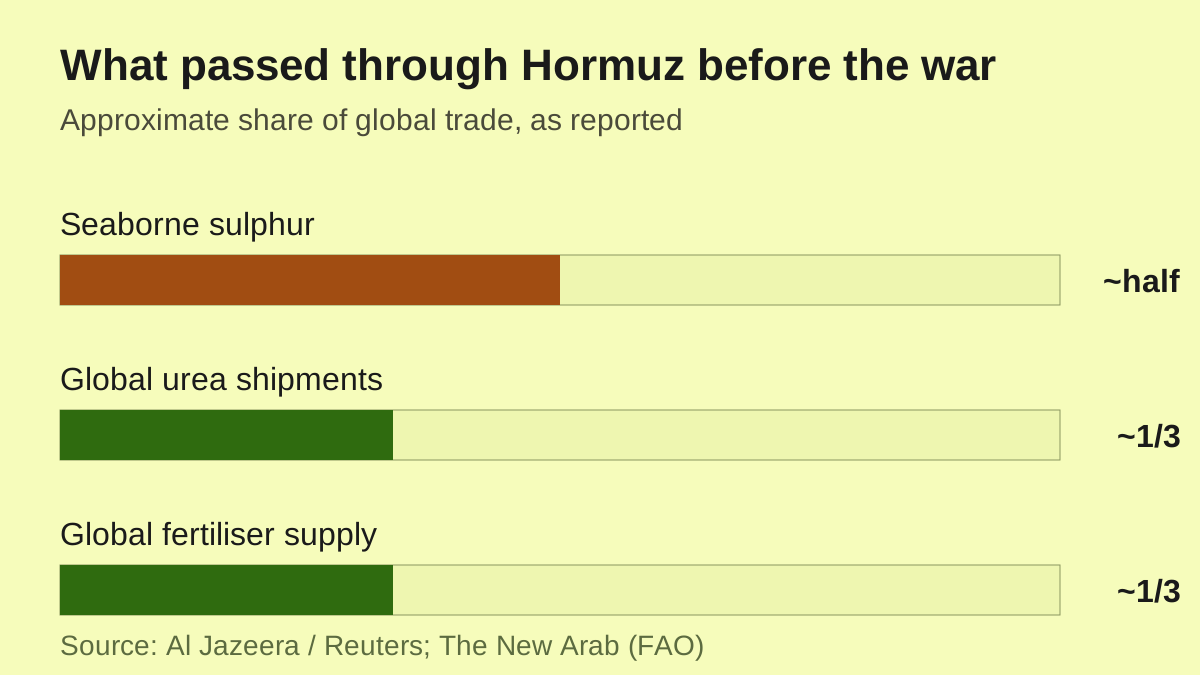
Shipping through the strait has been severely disrupted since the start of the US-Israel war on Iran. Al Jazeera reports that Iran has targeted vessels there, and that the US and Iran have exchanged fire in and around the waterway. Before the war, roughly a third of global urea shipments and nearly half of seaborne sulphur passed through the strait. Urea is the world’s most widely used nitrogen fertiliser, and sulphur is a key input for fertiliser production.
UN News reported in March, citing UNCTAD, that daily traffic through the strait fell from about 130 ships before the crisis to single digits in early March, a drop of more than 95%. Nitrogen-based fertilisers face higher production costs because they depend heavily on Gulf gas. The Washington-based International Food Policy Research Institute said that fertiliser products make up a “very negligible” share of the cargo now moving, though some ships are sailing.
Iran and the US have exchanged proposals through intermediaries since a June interim ceasefire collapsed, according to Al Jazeera. Talks have stalled over Tehran’s conditions and Washington’s insistence on addressing Iran’s nuclear programme from the outset.
Why it matters
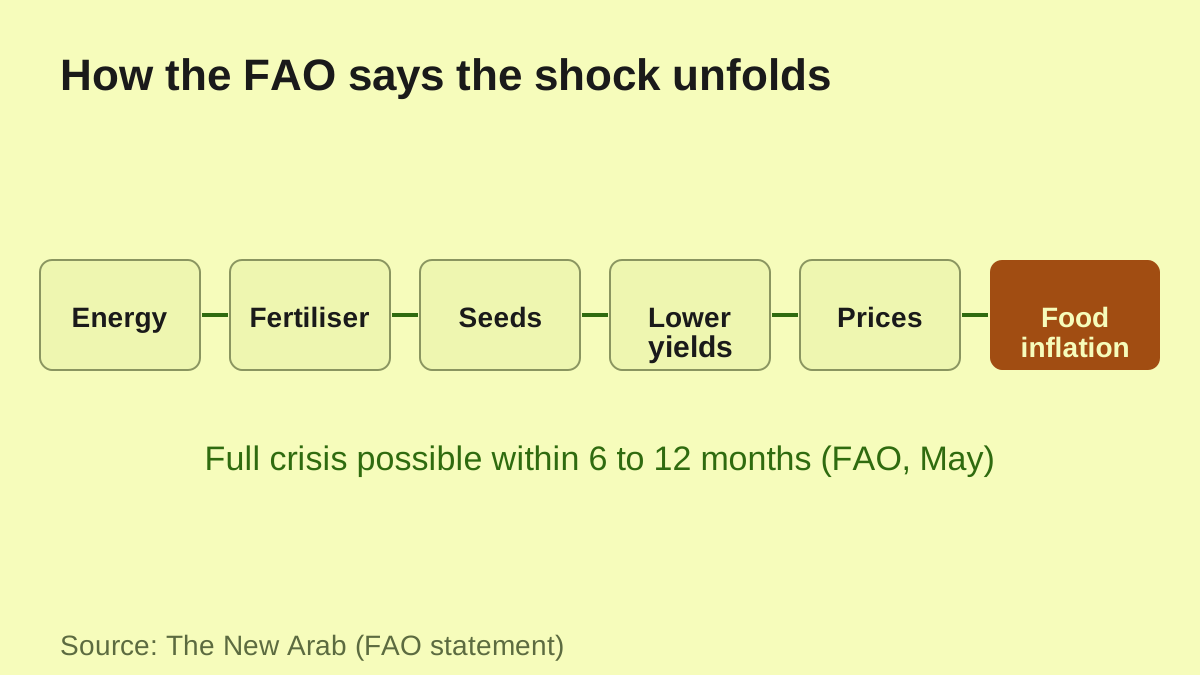
In May, the UN Food and Agriculture Organization (FAO) said the blockage was “not a temporary shipping disruption” but “the beginning of a systemic agrifood shock”, according to The New Arab. The FAO warned that a full-blown global food crisis could arrive within six to 12 months, and described a sequence running from energy and fertiliser to seeds, lower yields, commodity price increases and then food inflation. It said its global food price index had risen for three consecutive months since the conflict began.
Al Jazeera notes that in South Asia, where most farmers rely on imported fertiliser, farmers are already struggling with soaring costs and scarcity. On Wednesday, farmers in Spain protested rising production costs amid high oil and fertiliser prices. UN News reported in March that least developed economies have the least capacity to absorb such shocks. The FAO’s May recommendations included looking at alternative routes, such as across the Arabian Peninsula to the Red Sea, avoiding export restrictions on energy and fertilisers, and exempting food aid from trade curbs.
What to watch
- Whether Iran and the US agree to the UN plan, and how quickly the Oman centre could start operating after that.
- Whether the number of fertiliser-carrying vessels using the strait rises from the “very negligible” level reported by IFPRI.
- Progress in the wider US-Iran talks on freedom of navigation, which have stalled over Iran’s conditions and the nuclear question.
- Planting-season outcomes and food price data in South Asia and Africa, and further FAO price index readings.